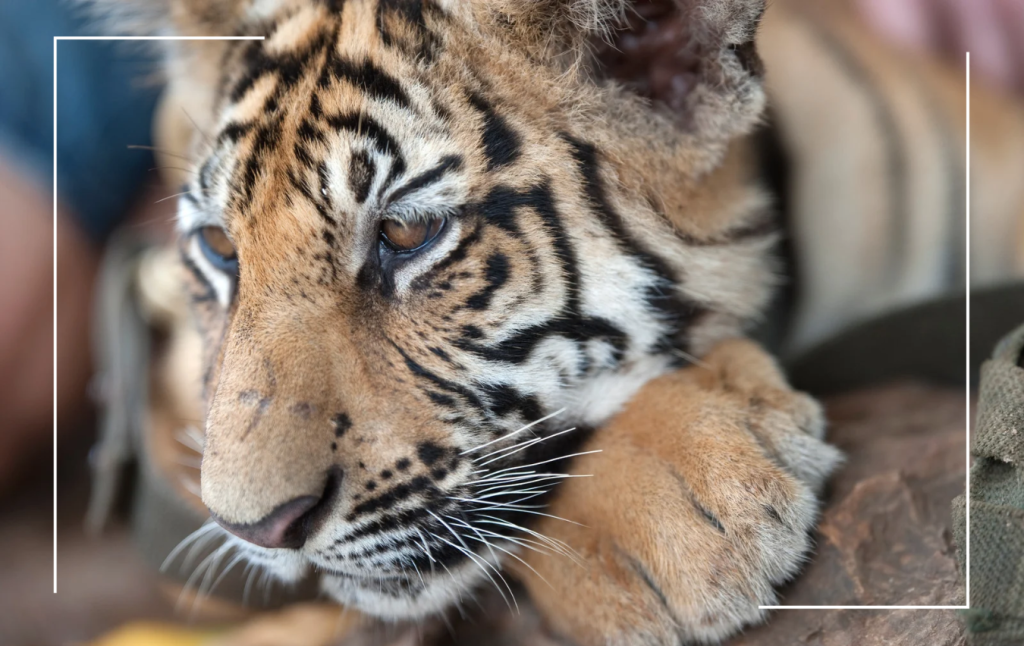
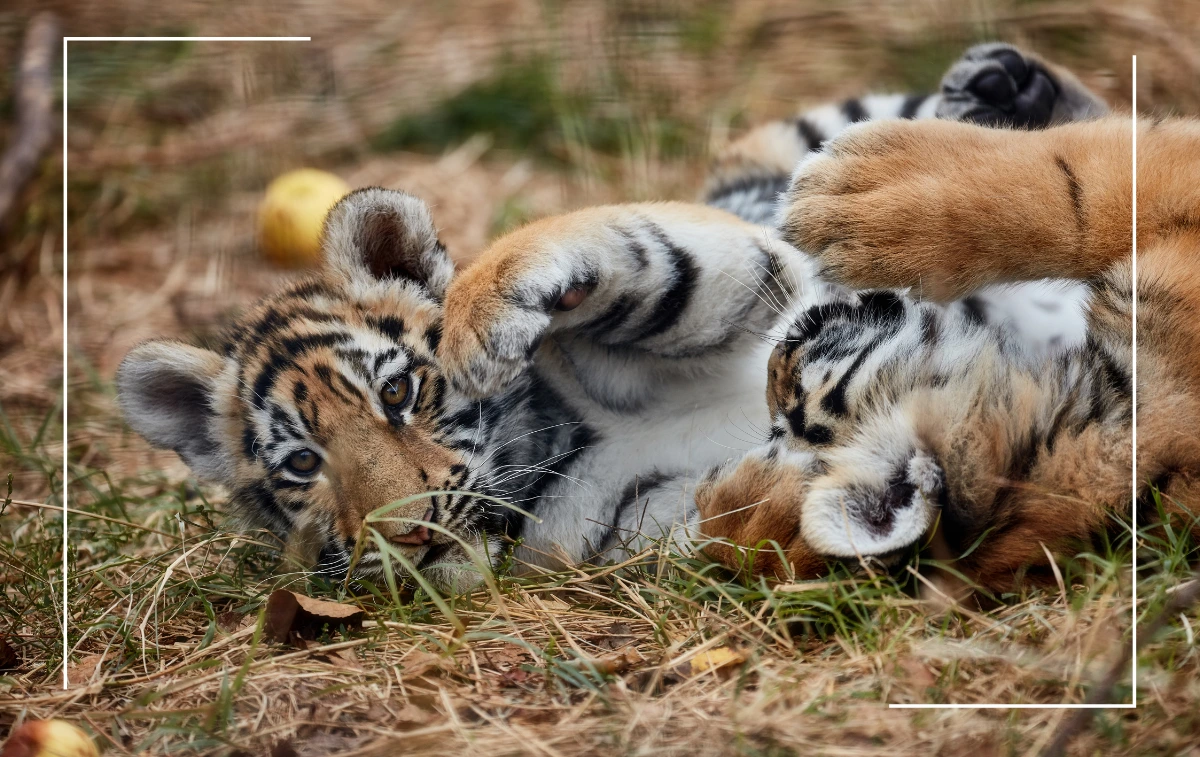
Every year on International Tiger Day, we celebrate one of nature’s most iconic predators and one of the planet’s most recognisable species. Yet behind the celebration lies a harsh reality: around the world, tiger populations are under threat. While tigers are adversely affected by climate change, habitat loss, and human-wildlife conflict, the illegal tiger trade is considered one of the most immediate threats to their survival.
One significant factor enabling this trade is often overlooked: the role of “tiger farms”.
Today, fewer than 6,000 tigers remain in the wild worldwide. At the same time, an estimated 8,900 captive tigers are housed in more than 300 tiger farms across Asia, with additional captive populations in countries including South Africa. Wildlife Justice investigations have shown how some tiger farms are exploited by criminal networks to channel captive tigers and tiger products into illegal supply chains.
When captivity fuels criminal markets
The international commercial trade in wild tigers and their parts has been prohibited for decades under Appendix I of the Convention on International Trade in Endangered Species of Wild Fauna and Flora (CITES). Despite this protection, demand remains high for tiger bones, skins, teeth, claws, and other body parts used in traditional medicine, wine and tonic products, jewellery, décor, and luxury products. Tigers are also trafficked into the illegal pet trade.
Although poaching continues to threaten wild populations, investigations have revealed another critical dimension of the trade: the role of captive tiger facilities.
Poor regulation, weak oversight, and inadequate monitoring can create opportunities for criminal networks to exploit tiger farms and for captive tigers and their products to enter illegal supply chains.
Rather than reducing pressure on wild populations, tiger farms can perpetuate consumer demand, facilitate the laundering of illegally-sourced products, and sustain illicit markets.
The business behind tiger trafficking
Tiger trafficking is not opportunistic crime; it is a sophisticated transnational business involving breeders, brokers, transporters, processors, traders, and financiers operating across multiple jurisdictions.
These actors work across borders to source, process, transport, and sell tiger products, often exploiting gaps in enforcement and international cooperation. This makes tiger trafficking a complex criminal enterprise that requires more than individual seizures or arrests to dismantle.
While rescuing individual tigers and intercepting shipments of tiger products are important, disrupting the trade requires identifying the criminal networks coordinating it, tracing financial flows, and supporting law enforcement to target the individuals profiting most from the trade.
Protecting tigers also requires closing the regulatory gaps that allow organised criminal groups to exploit tiger farms, strengthening oversight, and ensuring existing laws are effectively implemented and enforced. Recognising tiger trafficking as serious transnational organised crime is essential to ensuring authorities have the tools and cooperation needed to investigate networks, follow financial flows, and pursue those driving the trade.
Turning intelligence into action
Years of investigations by Wildlife Justice across the Greater Mekong Subregion have documented how organised criminal networks exploit captive tiger facilities and identified the vulnerabilities that enable the illegal trade.
These findings formed the basis of our report To Skin a Cat: How Organised Crime Capitalises and Exploits Captive Tiger Facilities, which outlined recommendations to help governments address these risks. These include improving oversight of captive facilities, strengthening intelligence-sharing and law enforcement cooperation, increasing penalties for high level offenders, and addressing the financial aspects of wildlife crime.
Building on these recommendations, Wildlife Justice has worked collaboratively with partners to support practical solutions that reduce opportunities for exploitation.
One example is the Roadmap to Closing Captive Tiger Facilities of Concern, developed through a partnership of organisations working to support governments to phase out tiger farms. The roadmap incorporates key recommendations identified through investigations, including audits of captive tiger facilities, improved record-keeping and traceability measures such as national DNA databases, and long-term plans for the responsible management of captive animals.
The Roadmap and the findings from To Skin a Cat have also informed discussions at international forums, including CITES processes on captive tiger facilities and big cat conservation, equipping governments with evidence-based recommendations to strengthen responses to illegal trade.
Complementary resources, including the General Guidance for the Inspection of Captive Tiger Facilities and the Tackling Tiger Trafficking Framework, provide governments with technical guidance to strengthen investigations, intelligence-sharing, law enforcement cooperation, and criminal justice responses.
While progress has been made, further action is still needed. Gaps remain in national regulations, particularly concerning the possession and trade of non-native big cats and hybrid animals bred in captivity. Continued efforts to strengthen oversight of captive facilities and improve international cooperation will be essential to preventing criminal networks from exploiting these vulnerabilities.
Protecting tigers means closing the gaps exploited by tiger trafficking networks
The future of tigers depends on more than defending forests or protecting wild populations. It also depends on addressing the systems—including tiger farms— that continue to fuel illegal markets.
Protecting tigers therefore requires disrupting the criminal networks behind the trade, closing the regulatory loopholes they exploit, and strengthening international cooperation to ensure that tigers remain where they belong—in the wild.
Tigers are not commodities: not to own, not to keep, not for us to consume.