Dear friends and supporters,
I am pleased to share the latest updates from the Wildlife Justice Commission as we advance our mission of disrupting transnational wildlife trafficking. From briefing the UK Parliament to expanding cooperation in Nigeria, our recent work underscores the urgency of collective action to prevent species extinction. As always, it is your steadfast support that makes this vital work possible.
Kind regards,
Olivia
Wildlife Justice Commission briefs UK Parliament
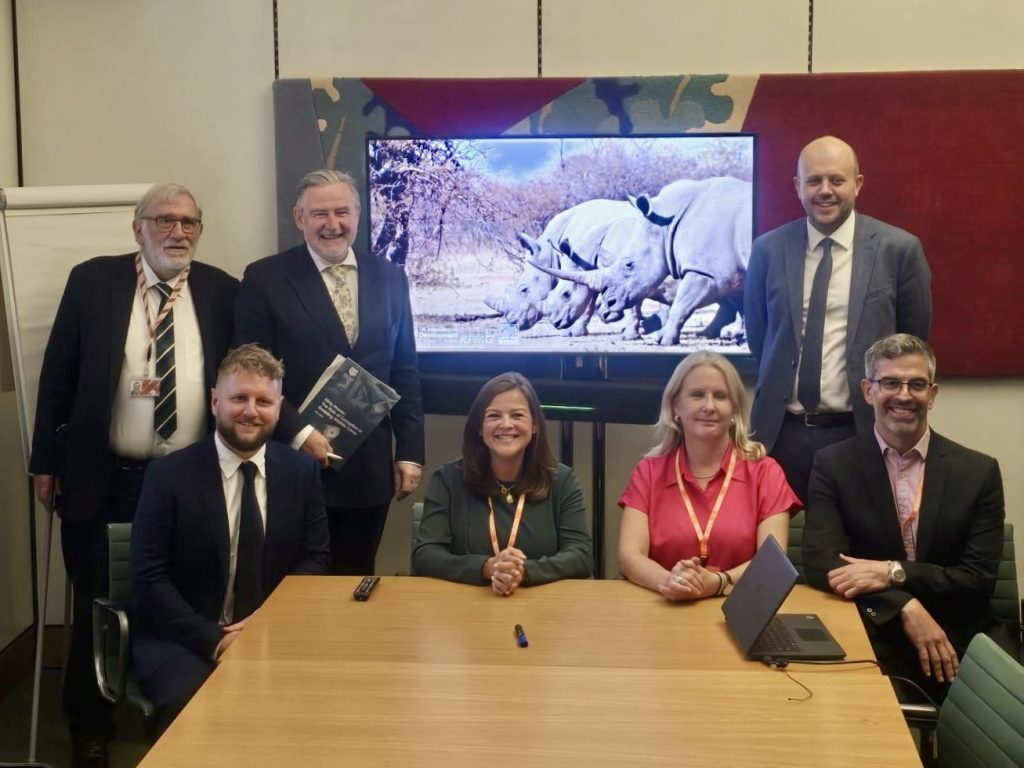
In September, the Wildlife Justice Commission (WJC) held a briefing for members of the UK Parliament regarding the intersection of corruption and environmental degradation. The briefing, “How Dirty Money is Destroying the Planet”, was convened by MPs Barry Gardiner and Joe Powell. Director of Policy Lisa Hartevelt outlined the depth of the problem, WJC’s response, and how the UK government can contribute to the solution.
As chair of the UNCAC Coalition Working Group on Environmental Crime and Corruption, we emphasised the urgent need to tackle corruption that fuels crimes that affect the environment (CAE), especially wildlife trafficking.
At Abu Dhabi summit, WJC highlights financial tools to tackle environmental crime
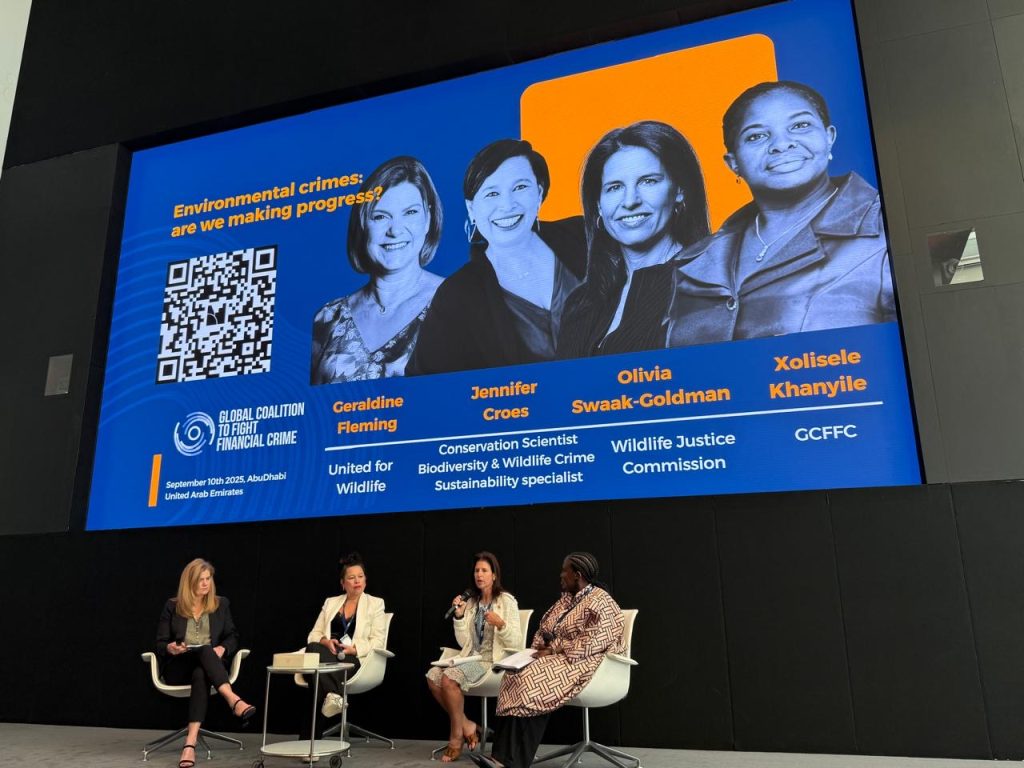
WJC Executive Director Olivia Swaak-Goldman spoke at the Global Coalition to Fight Financial Crime (GCFFC) Annual Summit in Abu Dhabi in September.
During the panel “Environmental Crimes: Are We Making Progress?”, Olivia described how financial crime frameworks can be used to fight environmental crimes, particularly wildlife trafficking. Citing WJC’s experience and expertise, she emphasised that:
- environmental crime, including wildlife trafficking, is serious crime;
- financial investigations must run in parallel to criminal investigations;
- strengthening financial crime frameworks can help prevent environmental crimes.
WJC continues to work with policymakers to ensure environmental crimes are treated with the seriousness they deserve, and that financial investigations and asset seizures become the default response—not the exception.
Building bridges between conservation and crime-fighting: Meeting with H.E. Razan Khalifa Al Mubarak
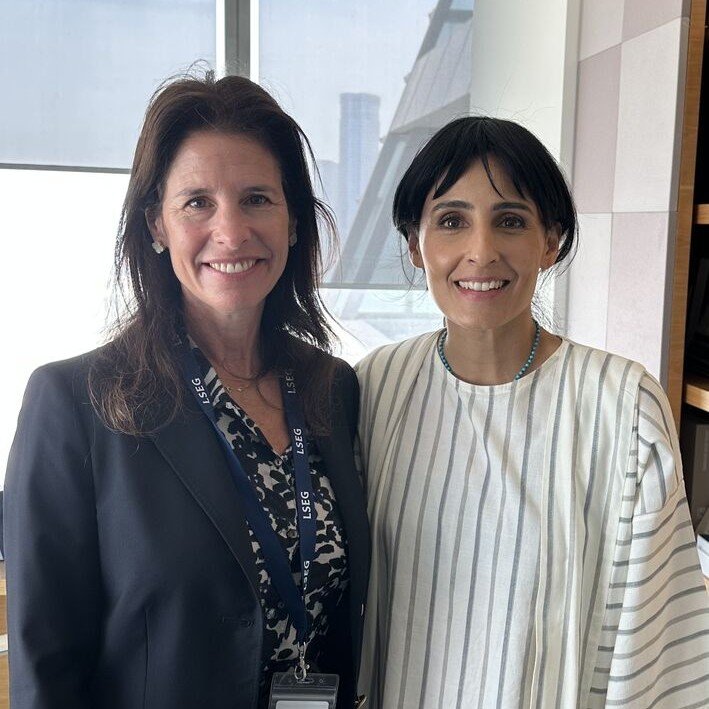
While in Abu Dhabi, Olivia met with Her Excellency Razan Khalifa Al Mubarak, Special Envoy for Nature under the Ministry of Foreign Affairs of the United Arab Emirates (UAE) and President of the International Union for Conservation of Nature (IUCN). Their discussion underscored the importance of connecting conservation and anti-crime efforts, and looked ahead to the upcoming IUCN World Conservation Congress, where WJC will co-host an event on wildlife crime. We look forward to continued collaboration with Her Excellency.
On World Rhino Day, WJC sounds the alarm
Wildlife trafficking remains one of the most urgent threats to biodiversity. Across continents, it undermines governance, fuels corruption, and drives species to extinction. While many species are trafficked, few are as prominent—or as endangered—as rhinos. Rhino horn trafficking is a form of organised crime, with sophisticated transnational networks linking poaching in Africa to consumer markets in Asia.
To mark World Rhino Day 2025, WJC published the latest data on rhino poaching and rhino horn seizures, as well as insights and analysis of trafficking patterns. This information, drawn from our investigators and analysts, is a key resource for law enforcement officials and policymakers.
In addition, Olivia published an op-ed highlighting the urgency of protecting rhinos by disrupting the networks driving their decline, “World Rhino Day 2025: Protecting rhinos means targeting the networks driving their decline”.
WJC expands cooperation in Nigeria through new MoU with NESREA
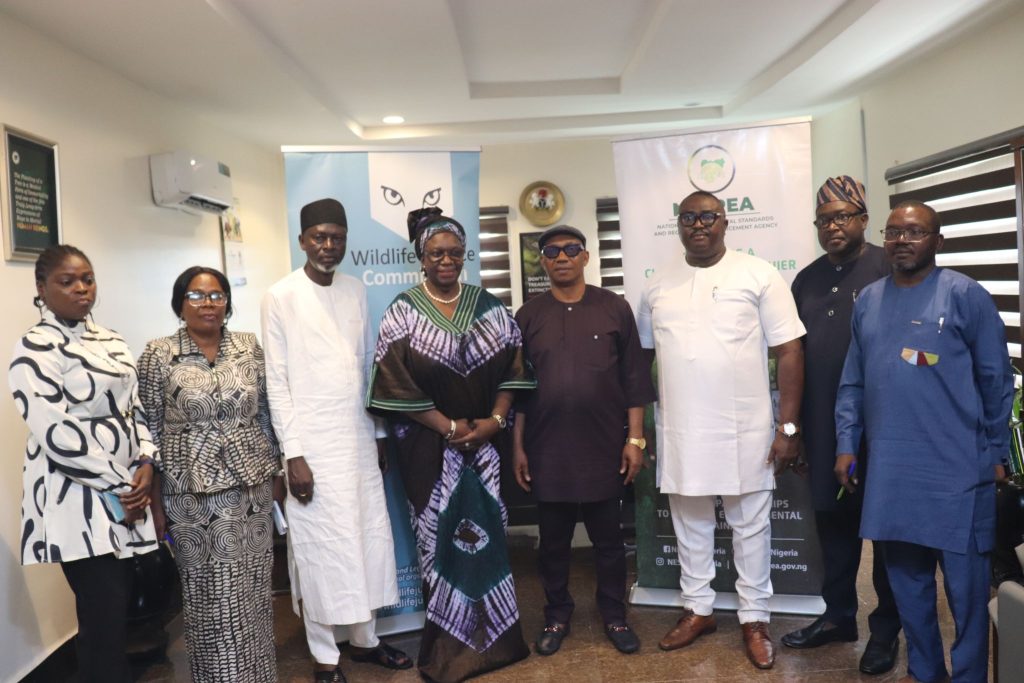
To strengthen cooperation against wildlife trafficking, WJC and Nigeria’s National Environmental Standards and Regulations Enforcement Agency (NESREA) signed a Memorandum of Understanding (MoU) in Abuja, Nigeria in September.
The MoU establishes a framework for cooperation to combat the transnational organised criminal networks trafficking in wildlife, fish, and timber. It also paves the way for future joint programmes with NESREA and the Nigerian Wildlife Law Enforcement Task Force. The MoU was signed by Prof. Innocent Barikor, Director General/CEO of NESREA, and Steve Carmody, WJC’s Chief of Investigations; at the signing ceremony, WJC was represented by Abim Isafiade, WJC’s Manager for West and Central Africa.
Among all of WJC’s successes, nowhere has our mission come to life more powerfully than in Nigeria. This new MoU with NESREA builds on that legacy. By expanding our partnerships, we can sustain and deepen this transformation—ensuring that Nigeria continues to set the benchmark for intelligence-led enforcement.”
New WJC report examines whether wildlife trafficking is treated as serious crime
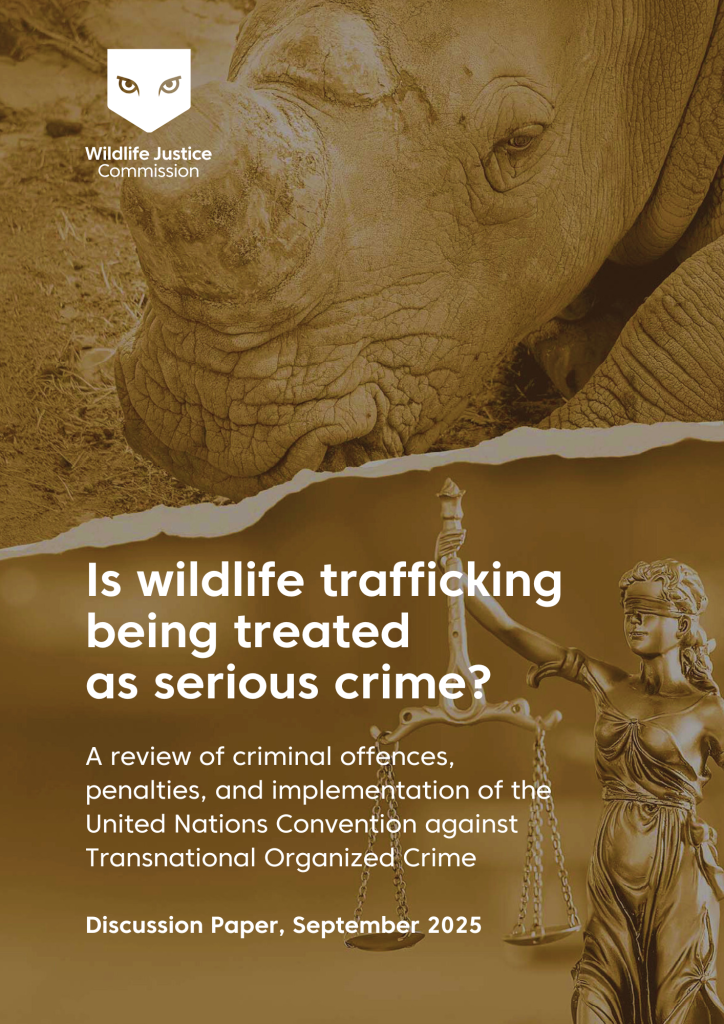
WJC published a new report examining whether national legal systems are treating wildlife trafficking with the seriousness it deserves.
The report assesses how the UN Convention against Transnational Organized Crime (UNTOC) has been incorporated into domestic legislation, and how effectively it is being implemented to tackle wildlife trafficking. Drawing on research from the 19 countries most affected by rhino horn trafficking, it analyses the criminalisation and penalisation of wildlife offences, and how key UNTOC provisions have been incorporated into law and implemented in practice. Through 10 rhino horn trafficking case studies, the report illustrates how enforcement and sentencing play out in practice, highlighting both best practices and challenges.
The report also urges States to strengthen domestic laws, fully implement and use UNTOC provisions, ensure proportionate sentencing, and invest in enforcement and judicial capacity so that wildlife trafficking is consistently addressed as the serious crime it is.
The Wildlife Justice Commission’s work is only possible through the commitment of our partners and supporters.
Saving species from extinction starts with action — please donate now.