Dear friends and supporters,
Our work this month demonstrates the power of partnership in tackling organised wildlife crime. From major enforcement successes in Nigeria and Liberia, to cross-border cooperation in southern Africa and high-level discussions at the United Nations in Vienna and New York, one message stands out: criminal networks operate across borders, and effective responses must do the same.
Through intelligence-led investigations, trusted partnerships, and sustained enforcement pressure, we are helping authorities identify and disrupt even the most entrenched criminal networks driving wildlife trafficking and other serious crimes.
Here are some of the latest developments from our work.
Warm regards,
Olivia Swaak-Goldman
Cross-border cooperation leads to arrests in Kruger murder investigation rested after five years on the run
Two suspects were arrested in Mozambique on 3 June 2026 in connection with the Crooks Corner murder case in Kruger National Park, South Africa, following a coordinated cross-border operation in which Wildlife Justice worked with Mozambican and South African authorities.
The arrests highlight the value of intelligence sharing, strong partnerships, and coordinated enforcement action in tackling transnational organised crime. They also demonstrate an ongoing challenge for law enforcement: crime convergence, where a single criminal network engages in multiple forms of serious criminal activity.
“We congratulate the Mozambican and South African authorities on the successful operation and commend their commitment to working together across borders to pursue those responsible for this tragic crime”, said Olivia Swaak-Goldman, Executive Director of the Wildlife Justice Commission.
Read more here.
Liberia: Intelligence-led investigation leads to pangolin trafficking arrests
Two suspected wildlife traffickers were arrested in Liberia on 22 May 2026 following a joint operation involving Wildlife Justice, the Liberia National Police, and Liberia’s Forestry Development Authority.
The operation took place in Monrovia and resulted in the seizure of 735.5 kg of pangolin scales, representing up to 3,970 pangolins. The operation builds on a previous joint investigation supported by Wildlife Justice in July 2024 that resulted in the arrest of two traffickers and the seizure of 524.5 kg of pangolin scales, representing up to 2,800 pangolins. Together, these cases demonstrate the value of sustained intelligence development and long-term investigations in identifying and disrupting criminal supply chains.
Read more here.
Nigeria: A new blow to ivory trafficking networks
Four suspected wildlife traffickers were arrested in Nigeria on 13 June 2026 following a targeted operation by the Nigeria Customs Service (NCS) and National Environmental Standards and Regulations Enforcement Agency (NESREA), acting on intelligence developed by Wildlife Justice.
The operation targeted a senior figure with a long-running ivory trafficking network identified through Wildlife Justice investigations and resulted in a seizure of 130.84 kg of ivory. “Traffickers who once operated with relative impunity are now facing a very different reality. Many have been arrested, forced to relocate, or significantly altered their operating methods in response to enforcement pressure”, said Swaak-Goldman.
The arrests are the latest example of how sustained, intelligence-led investigations and strong partnerships with Nigerian authorities continue to increase risks for traffickers and make wildlife trafficking a more difficult and less profitable business.

Read more here.
UNGA high level debate: Why environmental crime must be treated as organised crime
On 8 June at the United Nations Headquarters in New York, Wildlife Justice addressed the United Nations General Assembly High-Level Debate on “Preventing and Combating Illicit Trafficking in Wildlife and Other Crimes that Affect the Environment”, as well as a High-Level side event organised by United Nations Office on Drugs and Crime (UNODC).
Wildlife Justice Executive Director Olivia Swaak-Goldman highlighted a key lesson for attendees: environmental crime does not exist in isolation.
Drawing on Wildlife Justice’s investigative experience, she explained how environmental crimes are frequently linked to other forms of serious and organised crime, including corruption, money laundering, drug trafficking, human trafficking, fraud, and tax offences. This phenomenon, known as crime convergence, reflects the reality that criminal networks diversify across multiple illicit activities rather than limit themselves to a single crime type.
She also called on governments to move beyond treating environmental crime as a standalone conservation issue and instead address it as a form of transnational organised crime. She urged States to make greater use of existing tools under the United Nations Convention against Transnational Organized Crime (UNTOC) and the United Nations Convention against Corruption (UNCAC), and to support efforts towards a dedicated Protocol under UNTOC on crimes that affect the environment.
The central message was clear: if we want to disrupt and dismantle criminal networks, we must follow the network, not just the commodity.
An op-ed by Olivia Swaak-Goldman, A lesson we cannot ignore: Follow the network, not the commodity.
Read more here.
Wildlife Justice at CCPCJ 35: Following the money to strengthen criminal justice responses to environmental crime
At the 35th Session of the Commission on Crime Prevention and Criminal Justice (CCPCJ), Wildlife Justice joined governments, international organisations, and civil society partners to highlight the importance of following financial flows to combat crimes that affect the environment.
Together with Brazil, Canada, Colombia, France, the Netherlands, the Philippines, Peru, South Africa, the United Kingdom, and WWF International, Wildlife Justice hosted the side event, “From Commitment to Action: Following the Money to Address Crimes that Affect the Environment”.
The message was clear: to effectively combat crimes that affect the environment, enforcement efforts must target the financial incentives and criminal networks behind these offences.
Wildlife Justice called on States to strengthen criminal justice responses to crimes that affect the environment, including through enhanced international cooperation, more harmonised legal frameworks, and the effective use of existing tools under the United Nations Convention against Transnational Organized Crime (UNTOC) and the United Nations Convention against Corruption (UNCAC). Wildlife Justice also reiterated its support for a dedicated Protocol under UNTOC to strengthen the international response to these serious transnational crimes, as well as to implement commitments made at the UNCAC Conference of State Parties in Doha last December in a dedicated resolution aimed at preventing and combating corruption linked to environmental crime.
Celebrating ten years of partnership in Mozambique
Wildlife Justice works alongside law enforcement agencies worldwide to strengthen the fight against wildlife trafficking through intelligence-led investigations, operational support, and strategic partnerships.
Kindly hosted by the Embassy of the Kingdom of the Netherlands in Mozambique, Wildlife Justice was honoured to mark a decade of impactful partnership with Mozambique’s National Criminal Investigation Service (Serviço Nacional de Investigação Criminal) and the Attorney General’s Office (Procuradoria-Geral da República).
Over the past ten years our collective efforts have demonstrated that strengthening investigative capabilities, building trusted partnerships and supporting intelligence-led enforcement are critical to dismantling organised wildlife crime networks and increasing accountability for those driving the illegal trade.


Wildlife Justice publishes annual report marking ten years of disrupting criminal networks and protecting endangered species
Wildlife Justice recently published its 2025 Annual Report, marking a decade of investigations, policy leadership, and impact in the global fight against wildlife trafficking. In 2025, our investigations contributed to 53 arrests, including 10 high-level traffickers and kingpins, the disruption of 24 trafficking networks, and 13 successful convictions across multiple jurisdictions.
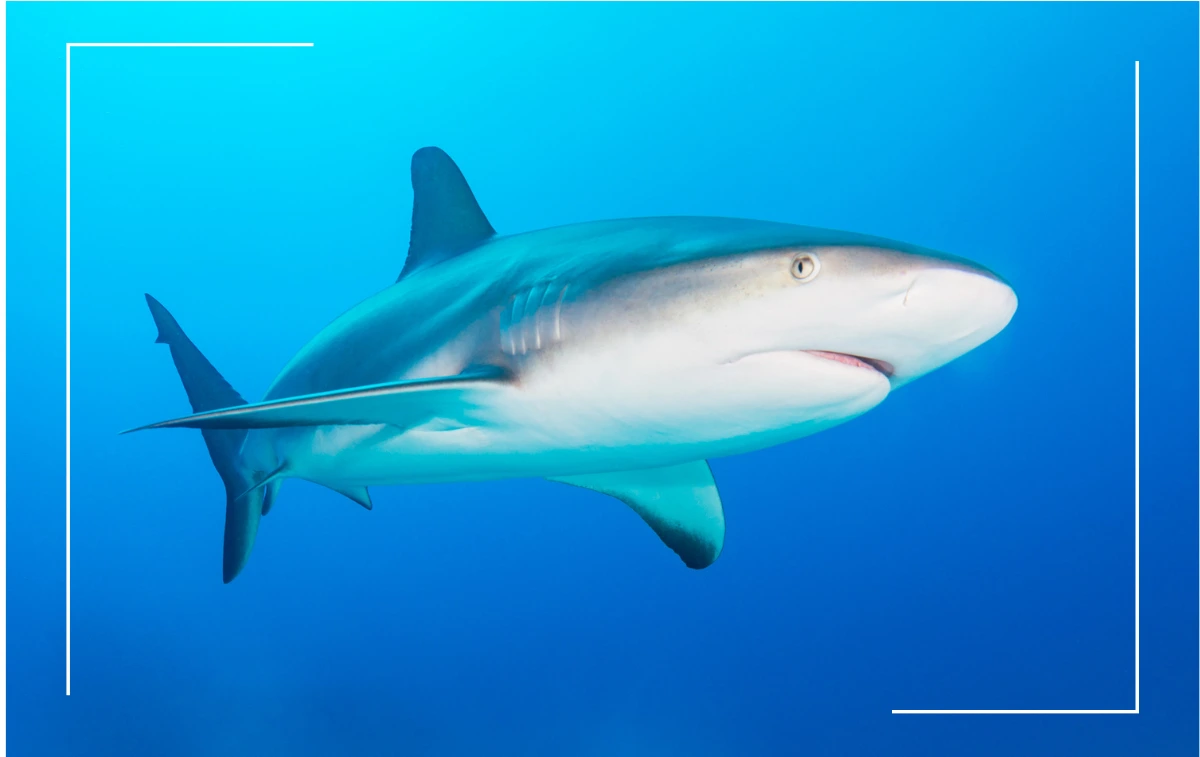
The year also saw the organisation expand its work against marine species trafficking, applying its investigative expertise to crimes involving sharks, sea cucumbers, and seahorses.
These results demonstrate what can be achieved through strong partnerships, innovative investigations, and sustained commitment to disrupt organised criminal networks and protect endangered species.
Read the Annual Report here.
Support our work—together, we can disrupt criminal networks and save species from extinction.