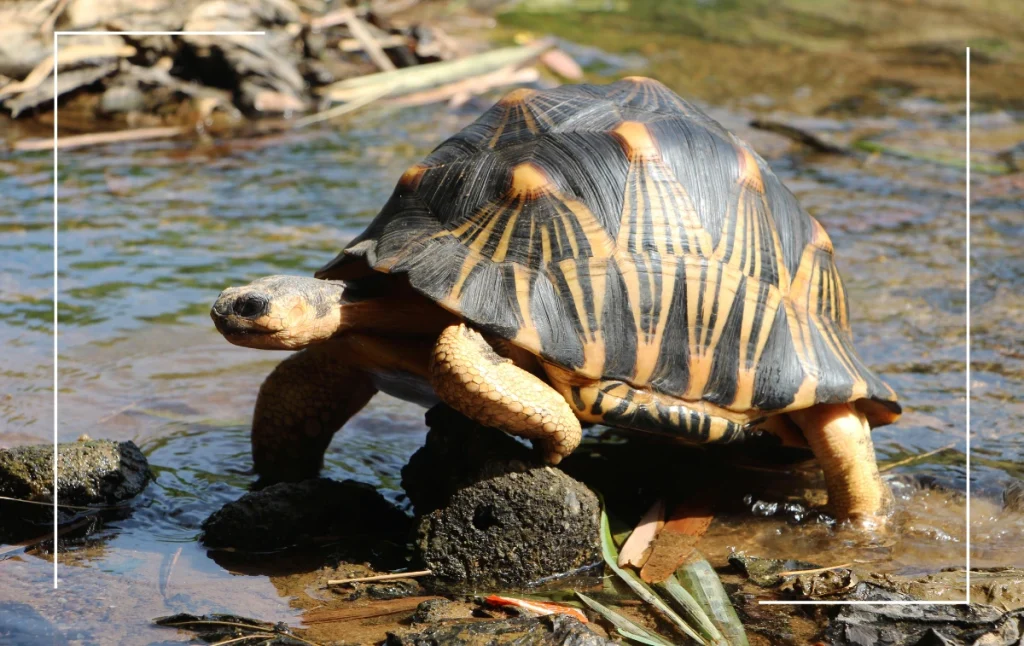

On 3 March 2026, an operation unfolded in southern Madagascar that would strike at the heart of an international wildlife trafficking network. Acting on intelligence provided by Wildlife Justice Commission investigators, authorities in Madagascar arrested three suspected wildlife traffickers and seized 167 critically-endangered radiated tortoises in Toliara. These animals, taken from the wild, were destined for the illegal pet trade in Southeast Asia, part of a transnational criminal supply chain that stretches from remote landscapes in Madagascar to high-value markets thousands of kilometres away.
The arrests were carried out by officials from Madagascar’s Ministry of Environment and Sustainable Development (MEDD), with the operation led by the Anti-Corruption Agency (DULC) of MEDD, in cooperation with DREDD South West and the National Police Rapid Intervention Unit (UIR) in Toliara.
Preliminary investigations point to the involvement of an organised criminal network trafficking protected species to meet the growing international demand for rare and exotic wildlife.
The successful operation to rescue the tortoises is not an isolated incident. It forms part of a broader Wildlife Justice effort to dismantle the criminal networks driving the illegal pet trade. These networks operate across borders, exploit vulnerable ecosystems, and push species closer to extinction.
A species under threat
Radiated tortoises are among the most iconic species native to southern Madagascar and are now facing severe pressure from wildlife trafficking. The species has been listed under Appendix I of the Convention on International Trade in Endangered Species of Wild Fauna and Flora (CITES) since July 1975, the highest level of international protection, reflecting the longstanding and serious threats to its survival.
The species is also classified as Critically Endangered by the International Union for Conservation of Nature (IUCN). Illegal collection for the pet trade, particularly of juveniles which fetch high prices in Asian markets, remains one of the primary drivers of population decline.
Current estimates suggest between 1.5 and 3 million radiated tortoises remain in the wild, a dramatic drop from the estimated population of around 6 million recorded in 2013. If this decline continues at its current pace, scientists warn the species could disappear from the wild within the next two decades.
Trafficking of radiated tortoises is largely controlled by organised criminal networks operating both within Madagascar and internationally.
Targeting the Madagascar-Asia trafficking nexus
The seizure is linked to Wildlife Justice’s ongoing investigation into the Madagascar–Asia illegal pet trade nexus, which began in 2024.
Since then, Wildlife Justice and its law enforcement partners have achieved:
- 27 arrests of live pet traffickers operating across the network
- The disruption of five criminal networks operating across four countries
- The rescue of more than 1,700 CITES-protected animals
These animals include 48 lemurs, 793 radiated tortoises, and 877 spider tortoises.
Investigations ongoing
Authorities continue working to identify additional co-conspirators connected to the trafficking network, as investigations remain active.
The results demonstrate the impact of sustained intelligence-led enforcement and close international cooperation in targeting organised wildlife crime. By focusing on the criminal networks driving the trade, rather than isolated incidents, this approach delivers lasting disruption where it matters most.
Wildlife Justice Commission remains committed to supporting law enforcement partners around the world to disrupt wildlife trafficking networks and prevent vulnerable species from being pushed toward extinction.