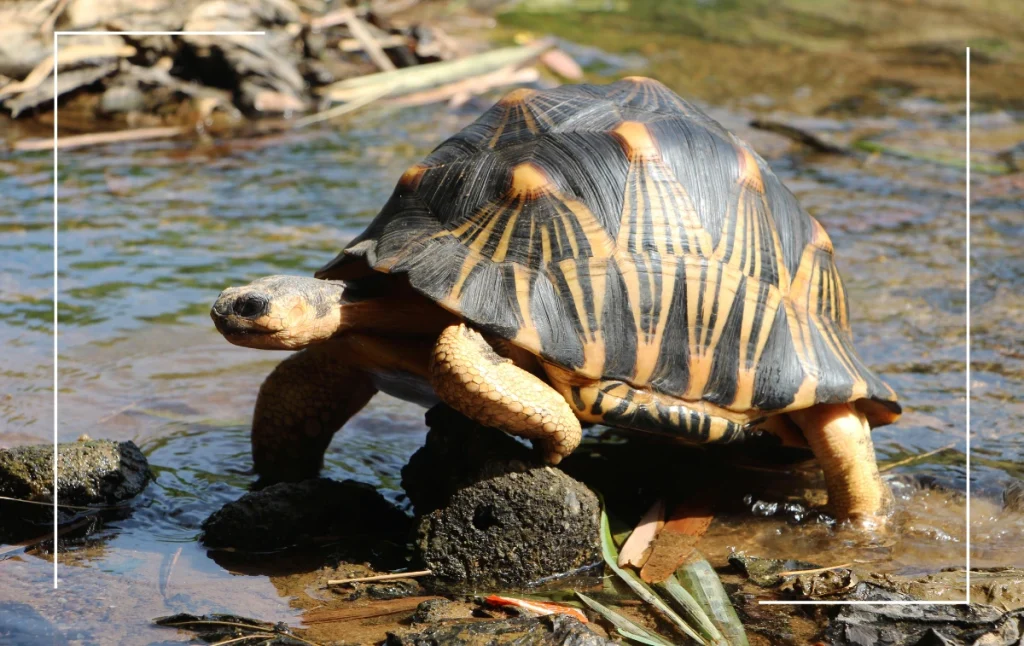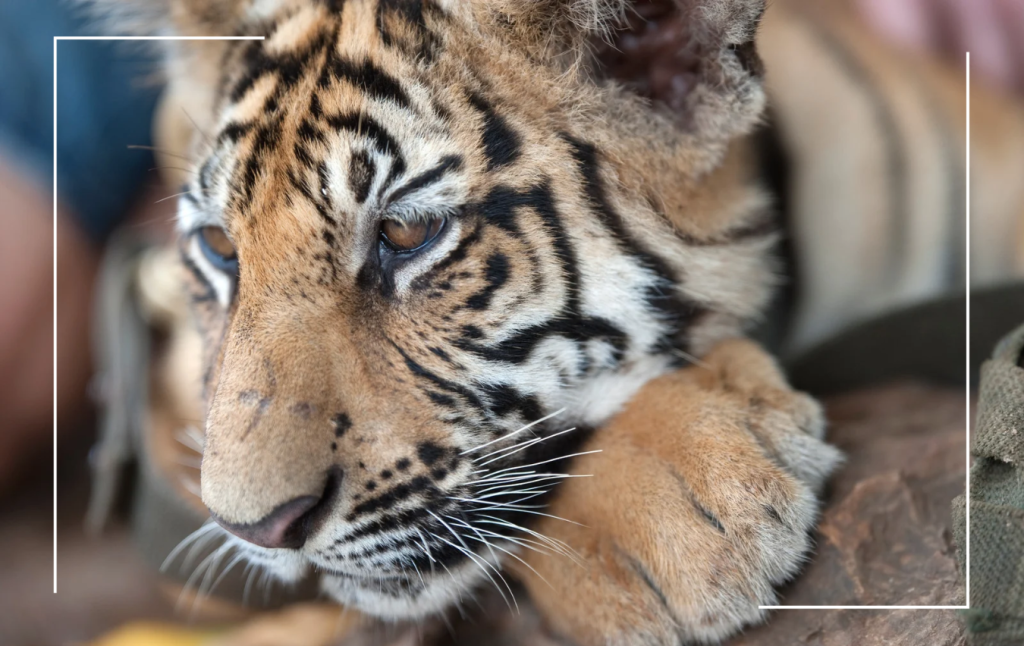

One year ago, a Qatar Airways plane took off from Bangkok’s Suvarnabhumi Airport carrying an unusual cargo: hundreds of live turtles, tortoises, and lemurs, stolen from Madagascar’s forests and trafficked to Thailand. The “lemur flight” was repatriating these survivors of wildlife crime, returning them to the wild, to their home in Madagascar.
The flight marked the culmination of a complex, transnational investigation into wildlife trafficking – an investigation driven by the Wildlife Justice Commission. The case demonstrates how our work helps dismantle wildlife crime networks, setting a new standard for these investigations.
On a rainy spring day in 2024, authorities intercepted a convoy in southern Thailand carrying dozens of lemurs and over 1,000 radiated tortoises, all packed into tiny boxes and cages. Both species are listed in CITES Appendix I, meaning international trade is prohibited except under exceptional circumstances. Yet, as the bust indicated, they remain highly trafficked in the global illegal pet trade. Six suspected traffickers were arrested, and the search of a related facility uncovered additional wildlife, leading to further arrests.
The operation was based on intelligence provided by Wildlife Justice: our undercover operatives infiltrated the trafficking network, mapped their supply chain, and identified the key actors. This enabled law enforcement to target the leaders, financiers, and coordinators, rather than just front-line traffickers, and facilitated intelligence sharing between Thai and Malagasy authorities, ensuring coordinated action across the network’s source and transit points.
The operation was a joint transnational effort, involving Thai authorities — the Department of Special Investigation (DSI), the Department of National Parks (DNP), Natural Resources and Environmental Crime Suppression Division (NED) of the Royal Thai Police, Royal Thai Customs, and the Attorney General’s Office (AGO) — alongside international partners, including the United States Fish and Wildlife Service (USFWS), the United Nations Office on Drugs and Crime (UNODC), and Wildlife Justice.
Our collective efforts led to the conviction of ten traffickers in Madagascar, including the network’s kingpin.
This case underscores the increasing threat of the illegal pet trade, one of the fastest-growing forms of wildlife crime. Traffickers exploit biodiversity hotspots across Asia, Africa, Latin America, and the Pacific to supply illicit markets in Europe, the Middle East, China, and the United States.
The case also provides lessons for disrupting the illegal pet trade. Successfully fighting wildlife trafficking requires intelligence-led investigations, to take down the ringleaders. It also requires cooperation and coordination among agencies and across borders. And – when dealing with several truckloads of traumatised wild animals – it requires creativity.
For Thai authorities, seizing the trafficked animals raised an immediate question: what is a law enforcement agency to do with hundreds of tortoises and lemurs? Often, live animals rescued from the illegal pet trade cannot be reintroduced to the wild due to an array of factors including the amount of time in captivity, and logistical complexity. Fortunately, Thai agencies acted quickly, and with support from United for Wildlife, Qatar Airways, and Fly Airlink, the animals were safely flown back to Madagascar.
One year ago, the “lemur flight” touched down at Ivato Airport in Madagascar, and the animals aboard were carefully reintroduced to their natural habitats. In the year since, they will have reacclimated. In the year since, many will have reproduced. And in the year since, Wildlife Justice has continued to apply the lessons of the “lemur flight,” disrupting criminal networks and saving species from extinction.