
As the Wildlife Justice Commission continues to disrupt transnational criminal networks and protect endangered species, our recent work underscores the power of collaboration — from global policy discussions to intelligence-led enforcement in the field.
Over the past month, we have contributed to high-level international forums shaping the global response to environmental crime, while strengthening partnerships that are delivering tangible enforcement results around the world.
Thanks to your support, we are proving that coordinated, intelligence-driven enforcement can disrupt criminal networks — and give wildlife a fighting chance.
Warm regards,
Olivia
Bridging climate security and environmental crime in Latin America
Executive Director Olivia Swaak-Goldman spoke to the 2025 Berlin Climate Security Conference, addressing a high-level session on “Bridging climate security and environmental crime: Latin America’s interconnected challenge.”
The discussion focused on aligning responses to environmental crime and climate security in Latin America. Olivia highlighted the need to integrate intelligence-led approaches, cross-border cooperation, and stronger criminal justice responses to tackle the convergence of organised crime, environmental degradation, and climate insecurity. She also noted that the Conference of States Parties to the UN Convention against Corruption will take place in December. At that conference, States will have the opportunity to prioritise the application of this binding international legal framework to tackle the link between corruption, environmental crime, and climate action. She emphasised that such engagement would allow countries to commit to a joint global response, which is essential given the transnational nature of environmental crimes and their impacts across continents.
Olivia’s remarks in Berlin underscore Wildlife Justice’s growing role in shaping global and regional policy at the intersection of security, governance, and environmental protection.

Wildlife Justice joins global call for stronger action against environmental crime at IUCN World Conservation Congress
WJC Executive Director Olivia Swaak-Goldman spoke at the Global Coalition to Fight Financial Crime (GCFFC) Annual Summit in Abu Dhabi in September.
During Wildlife Justice participated in the IUCN World Conservation Congress in Abu Dhabi, joining nearly 10,000 delegates from governments, civil society, Indigenous Peoples, and international organisations to shape the future of global conservation.
As a new IUCN member, Wildlife Justice urged that Crimes that Affect the Environment (CAE), including wildlife trafficking, be recognised as a serious threat to nature, people, and the planet, and be included in the Abu Dhabi Call to Action.
The Congress committed to stronger global cooperation to prevent and reduce CAE, aligning with Wildlife Justice’s call for intelligence-led, collaborative action to protect biodiversity.
WIRE Meeting: It takes a network to defeat a network
This month, Wildlife Justice joined over 130 representatives from 35 countries at the 9th Wildlife Inter-Regional Enforcement (WIRE) Forum in Bangkok, a key platform for advancing global law enforcement cooperation against wildlife crime.
Senior Director of Investigations Steve Carmody presented Wildlife Justice’s intelligence-led approach, highlighting how advanced intelligence collection and analysis can expose trafficking networks and financial flows.
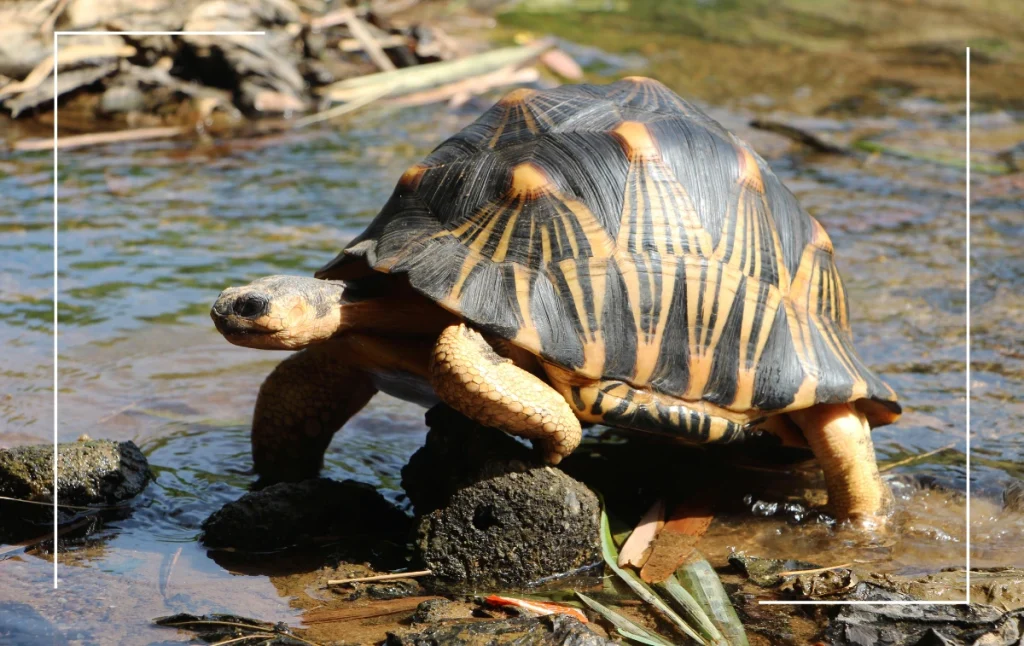
He showcased a Wildlife Justice-led operation that took down a network trafficking lemurs and tortoises from Madagascar to Thailand. Conducted with the Royal Thai Police, USFWS, and UNODC, the operation led to the historic repatriation of Malagasy species — and provides a clear example of the power of coordinated, intelligence-driven enforcement.
Read more about the operation here.

Building investigative capabilities in the Philippines
Wildlife Justice continues to strengthen law enforcement capability to combat wildlife trafficking and disrupt organised criminal groups.
In partnership with TRAFFIC, we delivered specialised training to local law enforcement partners in the Philippines to enhance intelligence collection and investigative capacities in the fight against wildlife crime.
These trainings were conducted under the project Taking Charge: Strengthening Criminal Justice Response to Wildlife Crime in the Philippines and funded by the United States Bureau of International Narcotics and Law Enforcement Affairs (INL).
Join us at CITES CoP: “Enforcement in action”
Criminal networks continue to traffic in CITES-listed species, driving vulnerable wildlife toward extinction. At the upcoming CITES CoP in Uzbekistan, Wildlife Justice and the Government of Nigeria will host a hybrid side event titled “Enforcement in Action” on 29 November at 19:00-20:30 local time (15:00-16:30 CET) at the Silkroad Samarkand Expo Center, in the Markhor room.
The event will highlight successful intelligence-led partnerships and law enforcement strategies that have significantly disrupted trafficking networks and reduced the illegal trade in pangolin scales, ivory, and other CITES-listed species.
Follow Wildlife Justice on social media to receive a link to join the meeting virtually and learn how coordinated, intelligence-driven enforcement is transforming the fight against wildlife trafficking worldwide.
New Seizure premieres 9 December on the Wildlife Justice Youtube channel
As the Wildlife Justice Commission marks a decade of impact, we’re proud to announce the global premiere of Seizure — a powerful short documentary offering a rare, behind-the-scenes look at the global fight against wildlife trafficking, one of the world’s most lucrative and destructive organised crimes.
Led by Senior Director of Investigations Steve Carmody, the 20-minute film goes undercover with our international team of operatives, analysts, and investigators in a real-time race to dismantle a transnational network trafficking pangolin scales.
Seizure premieres on 9 December on our YouTube channel.
Subscribe now and stay tuned for the premiere!

Our work disrupting criminal networks and saving species from extinction is only possible through the commitment of our partners and supporters. Please join us.