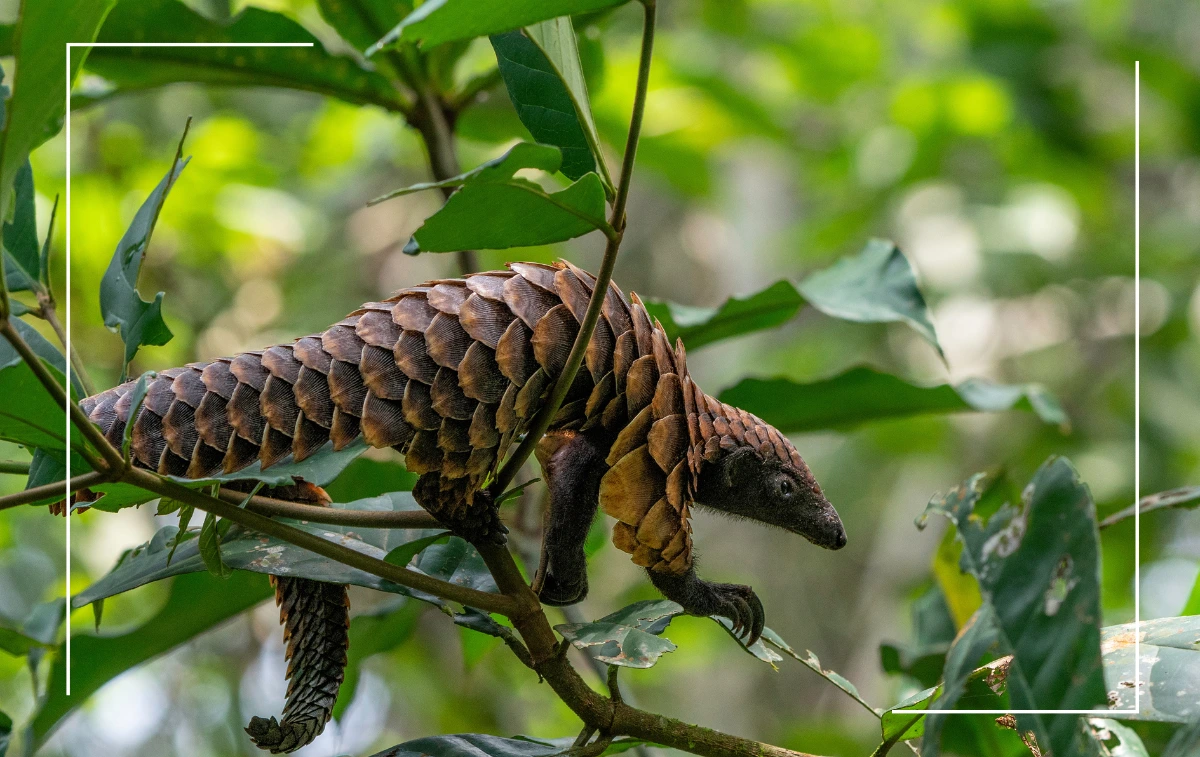
Two suspected wildlife traffickers have been arrested in Liberia following operations supported by the Wildlife Justice Commission, resulting in the seizure of 735.5 kg of pangolin scales, representing up to 3,970 pangolins.
On 22 May 2026, the Liberia National Police (LNP) and the Forestry Development Authority (FDA), acting on actionable intelligence gathered through Wildlife Justice investigations, arrested two suspected traffickers in Monrovia.
The operation marks the first reported wildlife trafficking arrests and significant pangolin scale seizure in Liberia since 2024 and signals renewed enforcement efforts against organised wildlife trafficking networks operating in the country.
The operation builds on a previous joint investigation supported by Wildlife Justice in July 2024, conducted in collaboration with the former Special Wildlife Investigation Unit of the Liberia National Police. That operation resulted in the arrest of two traffickers and the seizure of 524.5 kg of pangolin scales, representing up to 2,800 pangolins. Intelligence generated through the investigation identified additional suppliers and associates linked to the illegal wildlife trade who had remained active in Liberia.
The latest arrests demonstrate the value of long-term intelligence development, sustained investigative pressure, and targeted operations against transnational wildlife trafficking networks.
The operating environment is changing in Liberia, and wildlife traffickers are on notice”, said Olivia Swaak-Goldman, Executive Director of Wildlife Justice.
We commend the Liberian authorities for their commitment and decisive action against individuals involved in wildlife trafficking networks. For too long, traffickers have operated on the assumption that wildlife crime is a low-risk, high-reward activity. Operations like this help reverse that dynamic. By targeting individuals who play sustained and active roles within trafficking networks, authorities are increasing the risks for criminals involved in this trade and demonstrating that intelligence-led enforcement can disrupt organised wildlife crime”, she added.
Pangolins are one the world’s most trafficked mammals and are highly prized for their meat and unique scales, particularly in China and Vietnam, where the scales are used in traditional medicine. All eight pangolin species are protected under international law, and three species are listed as Critically Endangered on the IUCN Red List of Threatened Species. Overexploitation for illegal trade represents the greatest threat to all pangolin species.