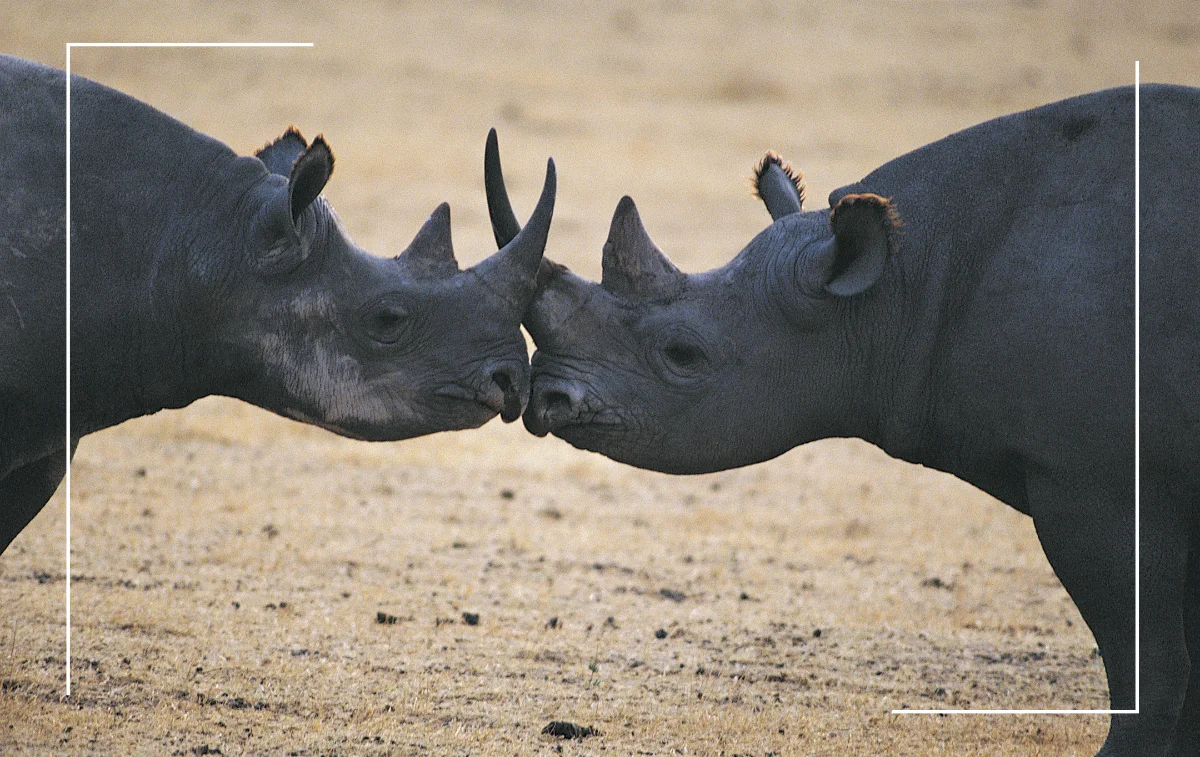
Rhinos are running out of time. Once they roamed Africa in their hundreds of thousands; today, their survival is measured in the thousands. In the case of the northern white rhino, only two remain—both living under armed guard. Rhinos are threatened by relentless poaching for their horns, fuelling a multibillion-dollar illegal trade orchestrated by transnational criminal networks.
If rhinos are to survive, we must do more than protect them in the field. We must dismantle the criminal networks driving their decline.
The continuing crisis
In South Africa, the epicentre of the crisis, 420 rhinos were poached in 2024. More than 400 have been lost every year since 2020, a painfully consistent toll. The country’s protected areas remain hard-hit, with KwaZulu-Natal’s reserves and Kruger National Park together accounting for nearly all recorded losses. The first quarter of 2025 brought no reprieve: 103 rhinos have already been killed, 65 of them in national parks.
Globally, seizures of rhino horn remain far below pre-pandemic peaks, but the killing is now rebounding and trafficking routes are shifting. Even as poaching has bounced back, the amount of poached horn being seized by authorities has plummeted, showing how organised crime networks have adapted to evade law enforcement—and how we must adapt with them.
The kingpin problem
Local poachers may pull the trigger, but the real power lies higher up—with the financiers, organisers, and traffickers who turn poaching into profit. Unless we target them, rhinos will remain in danger.
At the Wildlife Justice Commission (WJC), we are proving that these kingpins are not untouchable. For years, Simon Valoi, known as “Navara”, was one of the most prolific rhino poaching bosses in southern Africa, responsible for at least several hundred rhino deaths in Kruger National Park alone.
During a two-year investigation in partnership with Mozambique’s Serviço Nacional de Investigação Criminal, the WJC’s undercover investigators tracked Navara’s whereabouts, monitored his communications, and documented his network, resulting in his arrest. In 2024, he was convicted and sentenced to 27 years in prison in Mozambique. This case was historic: it was the first time evidence collected by an NGO was central to securing such a conviction. Navara’s imprisonment is a major blow to organised wildlife crime in southern Africa. It also sends a clear message: those who profit from rhino poaching are no longer untouchable.
The road ahead
Navara’s conviction is a milestone, but the fight is far from over. To save rhinos, we must continue to push beyond the poacher level, dismantling networks and following the illicit financial flows that sustain them.
Since its founding, the WJC has disrupted 95 organised criminal networks; helped seize over 35 tonnes of pangolin scales, ivory, and rhino horns; and rescued over 12,000 live animals. This groundbreaking work complements broader conservation approaches—such as community-led initiatives, demand reduction, and policy reform—by making wildlife crime a high-risk, low-reward business.
Unlike traditional enforcement agencies constrained by national borders, the WJC operates at a transnational level, covering entire supply chains from end to end. Our intelligence-led model allows us to act with speed and agility: we can deploy investigative teams in under 24 hours, infiltrate trafficking networks, gather intelligence, and respond dynamically to emerging threats. This approach allows us to act where and when it matters most, closing gaps that traffickers exploit and targeting networks at their core.
On this World Rhino Day, our message is simple: Rhinos are resilient, but without bold, sustained action, they remain at risk of extinction.
The WJC is committed to saving species from extinction. We target the criminal networks driving the illegal trade, working with law enforcement authorities to ensure traffickers are punished and their operations dismantled. But we cannot do it alone. Combatting organised wildlife crime requires strong partnerships, long-term commitment, and your support.
Join us. Together, we can stop wildlife crime from driving rhinos to extinction.