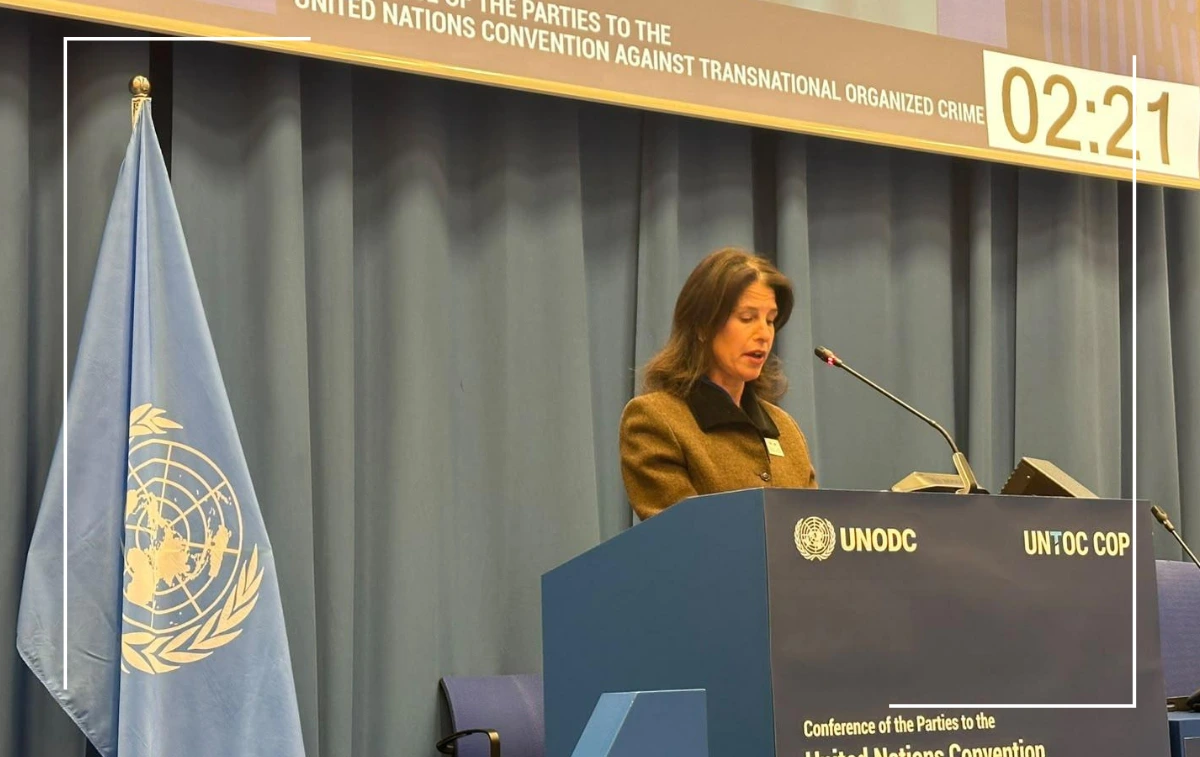
The Wildlife Justice Commission welcomes the decision taken by governments on 23 October during the 13th Conference of the Parties to the United Nations Convention against Transnational Organized Crime (UNTOC) to begin negotiations on a new protocol to this Convention.
The proposed protocol would be the first international instrument dedicated to tackling crimes that affect the environment, creating an opportunity to strengthen international cooperation against crimes including wildlife trafficking, illegal mining and waste trafficking. It would become the fourth protocol to the Convention, alongside those addressing human trafficking, migrant smuggling and firearms trafficking.
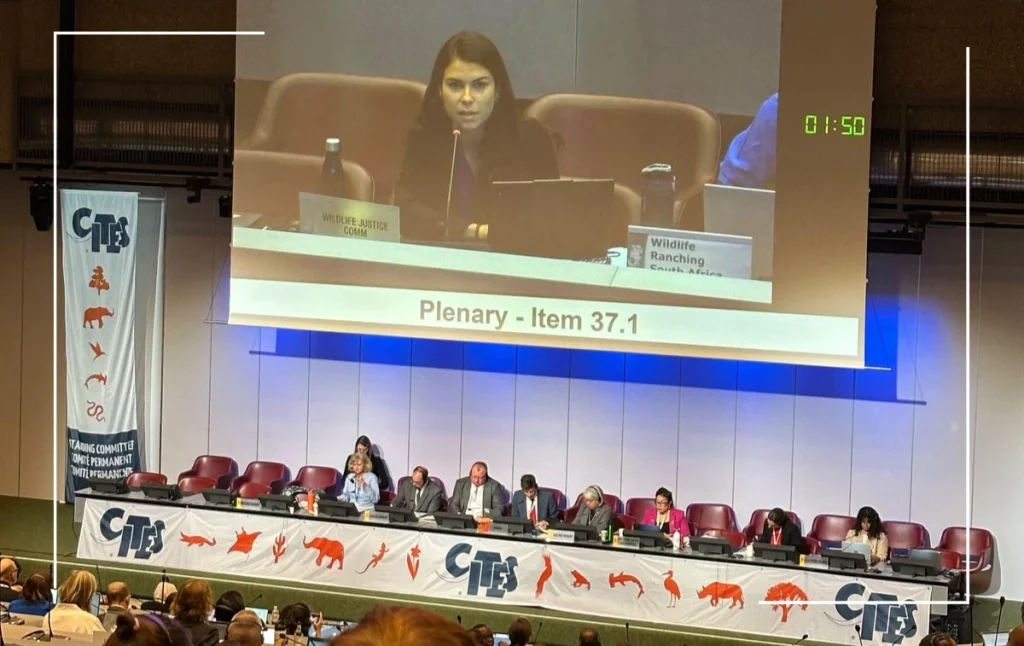
Wildlife Justice advocated for the negotiations by providing governments with evidence-based findings, briefings, and investigative expertise, including during the UNTOC Intergovernmental Expert Group on Crimes that Affect the Environment in 2025 and 2026, in the lead-up to the Conference of the Parties, and through its presence in Vienna during the negotiations on the proposed protocol.
“This decision marks an important step towards a stronger international response to organised environmental crime”, said Olivia Swaak-Goldman, Executive Director of Wildlife Justice. “We commend Brazil for taking this initiative forward. We also thank, the resolution’s co-sponsors for their support, as well as Peru and France for their sustained leadership in advancing this agenda in the last years.”
“This new instrument offers an opportunity to strengthen international cooperation, help authorities disrupt criminal networks, follow illicit financial flows, and tackle the corruption that enables these crimes. Effective responses must target the networks behind the illegal trade, not just the commodities being trafficked. We look forward to contributing our findings and expertise to help ensure the new protocol delivers meaningful action on the ground”, she added.
The Wildlife Justice Commission has advocated for a stronger international framework for years alongside partners. It is a founding champion of the Global Initiative to End Wildlife Crime (EWC), a civil society coalition calling for a new international agreement on wildlife crime since 2020, and is one of the 11 civil society organisations alongside 25 States in Brazil’s Coalition for Multilateral Action against Crimes that Affect the Environment. As Vice-Chair of the Alliance of NGOs on Crime Prevention and Criminal Justice’s Working Group on Crimes that Affect the Environment, Wildlife Justice has supported coordinated civil society advocacy at UNTOC and other international forums.
As negotiations now begin, the Wildlife Justice Commission will continue to advocate for an instrument that enables countries to work together to investigate and dismantle transnational criminal networks, strengthen financial investigations, address corruption and bring those responsible for environmental crimes to justice.